
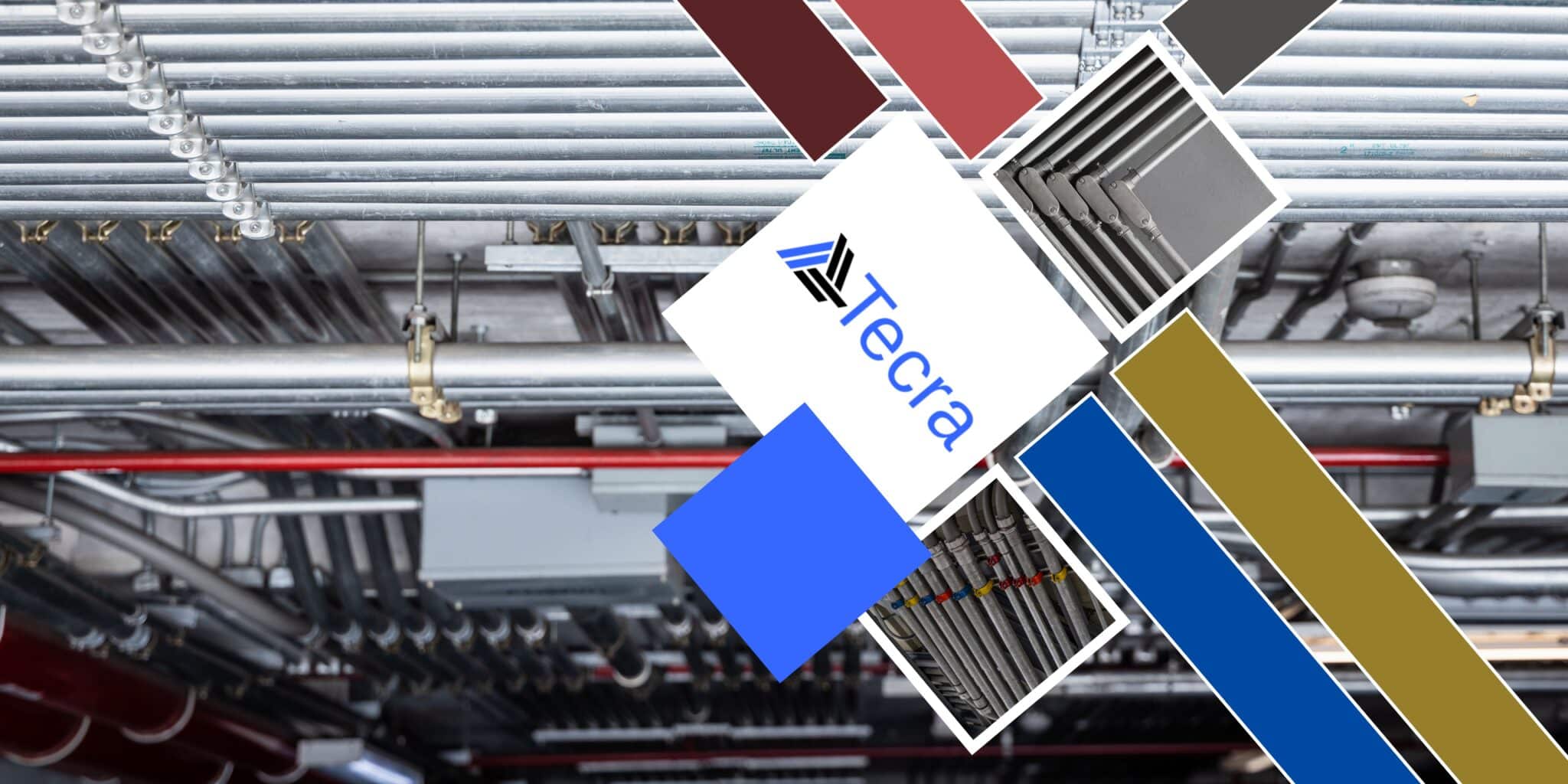
In industrial plants, electrical cables and equipment protection is a crucial aspect. For this reason, in many applications conduit tubes can be used. They are rigid tubes used to contain and protect impacts, vibrations, moisture, dust, chemical agents and corrosion.
Therefore, they have a double function: contain and protect any situation that could compromise the system functioning or cause downtime. In contests where an electrical fault can trigger more serious consequences than a service interruption, this function is essential and goes beyond the usual ordinary maintenance.
What conduit tubes are?
Conduit tubes are rigid tubes in which electrical cables run through the tube to protect them. Unlike generic tubes, they are designed to comply with the most rigorous international standards in terms of materials, thicknesses, finishes and connections.
In most sever industrial plant applications, the tube always works together with other accessories such as fittings, elbows, couplings, boxes, threaded accessories creating a continuous and highly resistant line. The real level of protection doesn’t not, in fact, depend on each component, but on the fact that each of them work together with the other ones.
How can you choose the material?
The choice of the materials depends on the environment where the plant must be installed and on the operating conditions.
The most common ones are:
- Galvanized carbon steel, the most spread solution in industrial plants thanks to a good balance of mechanical strength, corrosion resistance and cost;
- Stainless steel in AISI 304 or 316, when a higher level of corrosion resistance is required;
- Aluminium, when it is necessary to install a lighter plant while ensuring corrosion resistance.
Tecra conduit tubes: galvanized steel for AD-PE plants
Tecra conduit tubes are threaded galvanized steel tubes for explosion-proof electrical installations (AD-PE). They are different from the other kinds of tubes made of plastic, aluminium or stainless steel since they must comply with explosion-proof requirements. In fact, they have been designed for more specific industrial applications than usual cable protection systems.
The standard: UNI 7683
The tubes are made of galvanized carbon steel according to UNI7683 that establishes the manufacturing and structural characteristics of the tubes to use for explosion-proof electrical plants. It is not a mere formal detail, it is the benchmark that guides engineers, testers and project managers to verify if the plant really complies with the standard avoiding to work according to non-standard specifications.
Why galvanization makes the difference
Galvanization is realized according to EN 10240 which identifies the requirements for the protective coating for steel tubes and ensures a high corrosion protection without being obliged to use the stainless steel.
The zinc layer protects the stainless steel from oxidation and creates anti-corrosion coating that makes the tube more resistant also in severe environments. Unlike a simple surface paint, galvanization ensures a uniform protection of the entire pipe surface and offers a greater resistance also in case of small scratches and abrasions that can occur when transporting or installing the tube, typical situations happening in construction sites and that a less robust finish would not forgive.
Thread and couplings guarantees the system continuity
Tubes are supplied with threaded ends with UNI 6125 conical gas thread or American NPT thread, complete with a UNI 7684 coupling, which allow safe and fast connections that are fully compatible with threaded accessories. The opposite end is protected by a plastic cap.
Thread represents an essential component in metal conduit system because allows to realize strong and continuous mechanical connections. Moreover, the use of the coupling accelerates assembly processes and guarantees a stable connection over time.
Internal surface and available diameters
Internal sides are smooth and free from roughness to allow cables perfectly flow without the risk of damage when inserted into the tubes.
AD-PE range is available in the following sizes: 1/2″, 3/4″, 1″, 1.1/4″, 1.1/2″, 2″, 2.1/2″, 3″, 3.1/2″, 4″, 5″ e 6″.
Besides AD-PE range, Tecra also offers UL rigid tubes for electrical cables that are used for example in hazardaous area lighting – chemical, pharmaceutical, flammable and explosive environments – or for electrical cables protection, available with diameters from 3/8” to 6”.
Structural sturdiness: carbon steel value
Carbon steel provides structural sturdiness to conduit tubes, essential in industrial plants where electrical lines are usually exposed to severe conditions.
Considering the premises, it is easy to understand that in such contexts conduits tubes are not merely used as means of support, but as a real protection infrastructure designed to ensure operating continuity, safety and durability of the plant also in the most severe operating conditions.
Where conduit tubes are used: fields and applications
Conduit tubes are used in different industrial fields such as:
- Oil&gas plants, refineries;
- Petrochemical plants and chemical industry;
- Offshore installations;
- Power plants;
- Industrial automotive plants;
- Process skids.
Let’s talk about your plant
Tecra sells galvanized AD-PE conduit tubes. We will be glad to support our customers by offering a personalized quotation to meet the requirements of each project.
Contact us to receive technical information, to verify the stock and ask for a quotation.
FAQ
What AD-PE means?
It refers to explosion-proof and identifies electrical plants installed in potential explosive atmospheres. AD-PE conduit tubes are used to insert electrical cables in these kinds of plants to protect them.
What is the best among conduit tubes made of galvanized steel, stainless steel and PVC?
It depends on the environment and on the requirements of the plants. Galvanized steel is the best choice for plants in which mechanical sturdiness and explosion proof must be guaranteed; stainless steel is preferred in case of corrosive contexts and PVC is used where there are no AD-PE requirements to satisfy.
What are the available diameters?
AD-PE conduit tubes range include diameters from ½” to 6”, while UL type from 3/8” to 6”.
Is galvanization sufficient for aggressive environments?
The zinc layer ensures uniform and continuous protection on the entire surface even if there are small abrasions. In most industrial plants it is the most cost-effective and cost-efficient solution rather than stainless steel. Nevertheless, the evaluation may vary case by case depending of the real operating conditions.